

Black Masking Indians are one of the most powerful and visually striking cultural traditions in New Orleans. Known for hand-crafted beaded suits, deep neighborhood roots, and ceremonial street appearances, the tradition represents artistry, resilience, ancestry, and community pride.
This guide was originally created for the JAM APP, JAMNOLA’s interactive digital companion designed to help guests go deeper into the culture, stories, and hidden layers of New Orleans. Inside the app, visitors can unlock exclusive content, neighborhood insights, behind-the-scenes context, and thoughtful deep dives like this one that bring the city to life beyond what you see on the surface.
Because this story deserves to live beyond the walls of the app, we’re sharing it here on the web as well. Visitors often hear the phrase “Mardi Gras Indians,” but many culture-bearers and scholars also use Black Masking Indians to reflect that this is a living tradition practiced far beyond Mardi Gras Day. At JAMNOLA, we believe New Orleans culture deserves context, care, and celebration, so we invited one of our storytellers to help answer one of the city’s most common questions: Who are the Black Masking Indians?
This guide was developed with insights from Khalif Aziz B., a JAMNOLA storyteller and Doctoral student of Anthropology whose work explores heritage, performance, and preservation in New Orleans.
Who Are the Black Masking Indians? A New Orleans Tradition of Art, Honor & Heritage
Quick Overview
- A historic New Orleans tradition rooted in Black cultural expression and Afro-Indigenous connections
- Known for elaborate hand-sewn suits made with beads, feathers, and storytelling imagery
- Organized in neighborhood-based tribes led by respected cultural figures
- Most visible on Mardi Gras Day, St. Joseph’s Night, and Super Sunday
- A tradition centered on artistry, respect, music, ritual, and community memory
What Does Black Masking Mean?
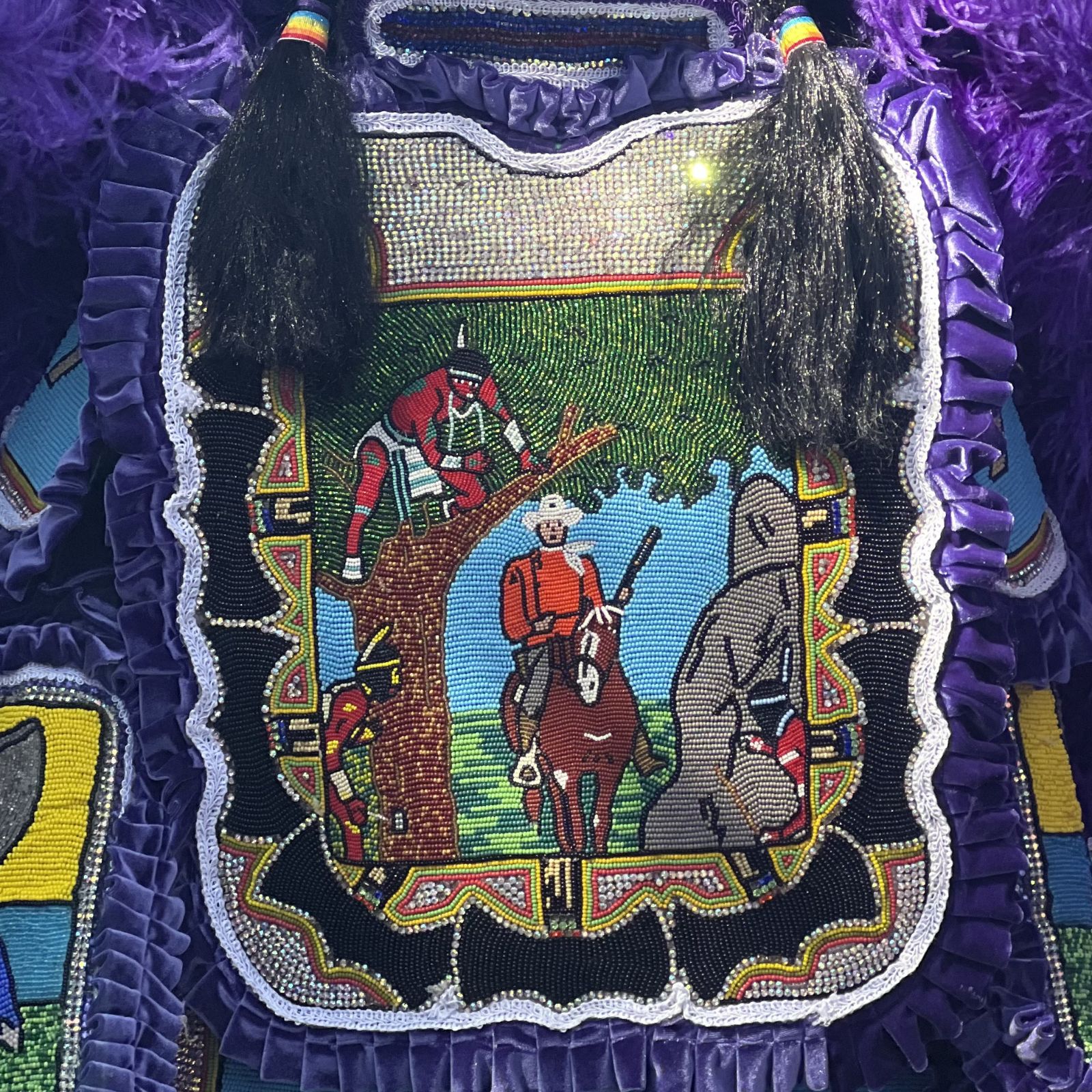
This is a tradition carried by the Black community of New Orleans, whose members masquerade in elaborate suits modeled after Indigenous warrior imagery. While “Mardi Gras Indian” remains widely used, Black Masking Indian acknowledges that the tradition exists year-round and reflects a broader cultural identity beyond one holiday.
Why Is New Orleans Central to the Tradition?
New Orleans is the birthplace of the tradition because of its unique concentration of African, Caribbean, Indigenous, and Creole influences. The original name of this land is Bulbancha, often translated as “place of many tongues.” Public gathering spaces like Congo Square helped preserve dance, rhythm, ceremony, and communal expression that shaped generations of local culture.
How Are Native Communities Connected?
Many oral histories describe Native Americans helping escaped enslaved people survive by sharing food, medicine, and knowledge of the land. Within the tradition, beads and feathers are often understood as symbols of gratitude, remembrance, and shared ancestry.
What Are the Historical Roots?
The modern form of the tradition is often linked to the late 1800s, including the emergence of the Creole Wild West. It also draws from older Afro-Indigenous dances, masking customs, ceremonial dress, and collective street performance traditions that evolved over time in New Orleans neighborhoods.
The Art of the Suit
Black Masking Indian suits are handmade works of art that can take months or even a full year to complete. They feature intricate beadwork, feathers, sculptural elements, and imagery chosen to tell stories, honor ancestors, or display creative mastery.
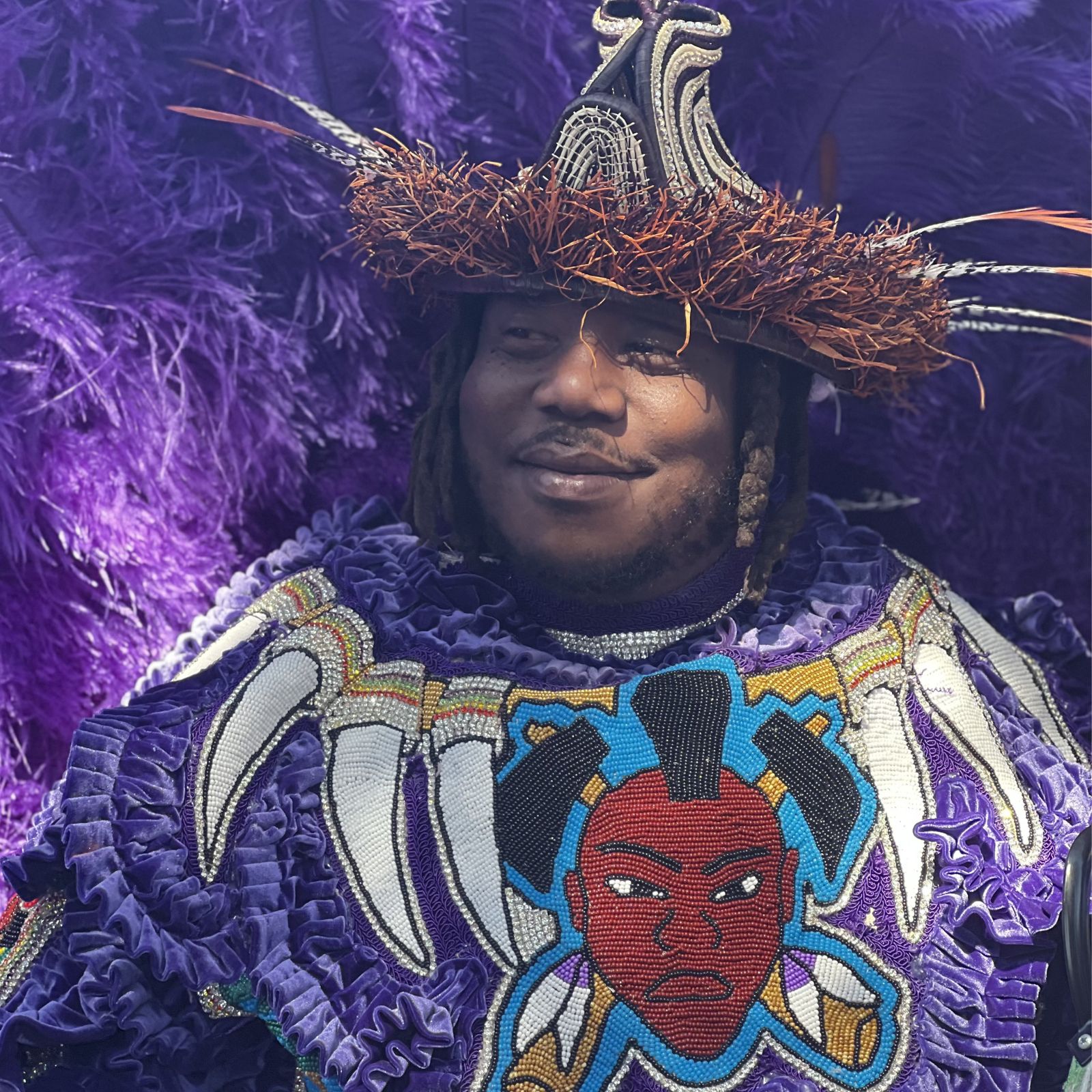
- Preferred term: suit or mask
- Not preferred: costume
- Compliment you may hear: “That suit is pretty.”
Beyond the visual beauty, tribes also pass down songs, chants, dance styles, sewing techniques, oral histories, and sacred practices from one generation to the next.
Tribes, Roles & Community Structure
The word tribe is often preferred over krewe because it reflects neighborhood lineage, chosen family, and community bonds rather than simply a parade organization.
- Spyboy: Scout and pathfinder
- Flagboy: Carries and leads with the tribe banner
- Wild Man: Protector and enforcer
- Big Queen: Song leader and culture-bearer
- Big Chief: Spiritual and artistic leader
Supporting Black Masking Indian Artists
One of the three charitable pillars of the JAM Shop is supporting the Black Masking Indian Co-Op. Through Jam Shoppe, we provide a permanent retail home for the Black Mardi Gras Indian Co-Op, ensuring these master artists have a year-round platform to sell their work—with 100% of sales going directly to the creators.
Learn more about our charitable impact and community partnerships here: Shop For Good NOLA
When Do Black Masking Indians Appear?
While many visitors associate the tradition with Mardi Gras Day, tribes also appear on other important dates throughout the year, including:
- Mardi Gras Day
- St. Joseph’s Night (March 19)
- Super Sunday (third Sunday in March, traditionally)
- Neighborhood and community celebrations
On these days, tribes may gather privately first in prayer or preparation before taking to the streets to honor elders, perform music, and meet rival tribes in artistic “battles” of beauty, style, and spirit.
Common Myths
-
Myth: The tradition came from only one source.
Reality: It draws from multiple African, Indigenous, and New Orleans influences. -
Myth: It is just entertainment for tourists.
Reality: It is a living community tradition with deep meaning and lineage. -
Myth: It only happens on Mardi Gras.
Reality: It continues year-round through making, mentoring, gathering, and ceremony.
Learn More
If this tradition interests you, explore documentaries such as All on a Mardi Gras Day, Bury the Hatchet, and Tootie’s Last Suit, or books like From Kingdom of Kongo to Congo Square and Jockomo: The Native Roots of Mardi Gras Indians.
Want to continue learning? Explore Pretty and So Much More, a powerful reflection on the Black Masking Indian tradition by cultural leader Cherice Harrison-Nelson.
The Bottom Line
Black Masking Indians are guardians of one of New Orleans’ most extraordinary living traditions. Through suit-making, music, movement, storytelling, and neighborhood pride, they preserve a legacy of creativity and resistance that continues to shape the spirit of the city today.
If you’d like to experience more authentic New Orleans culture, explore the immersive exhibits and local New Orleans stories at JAMNOLA.
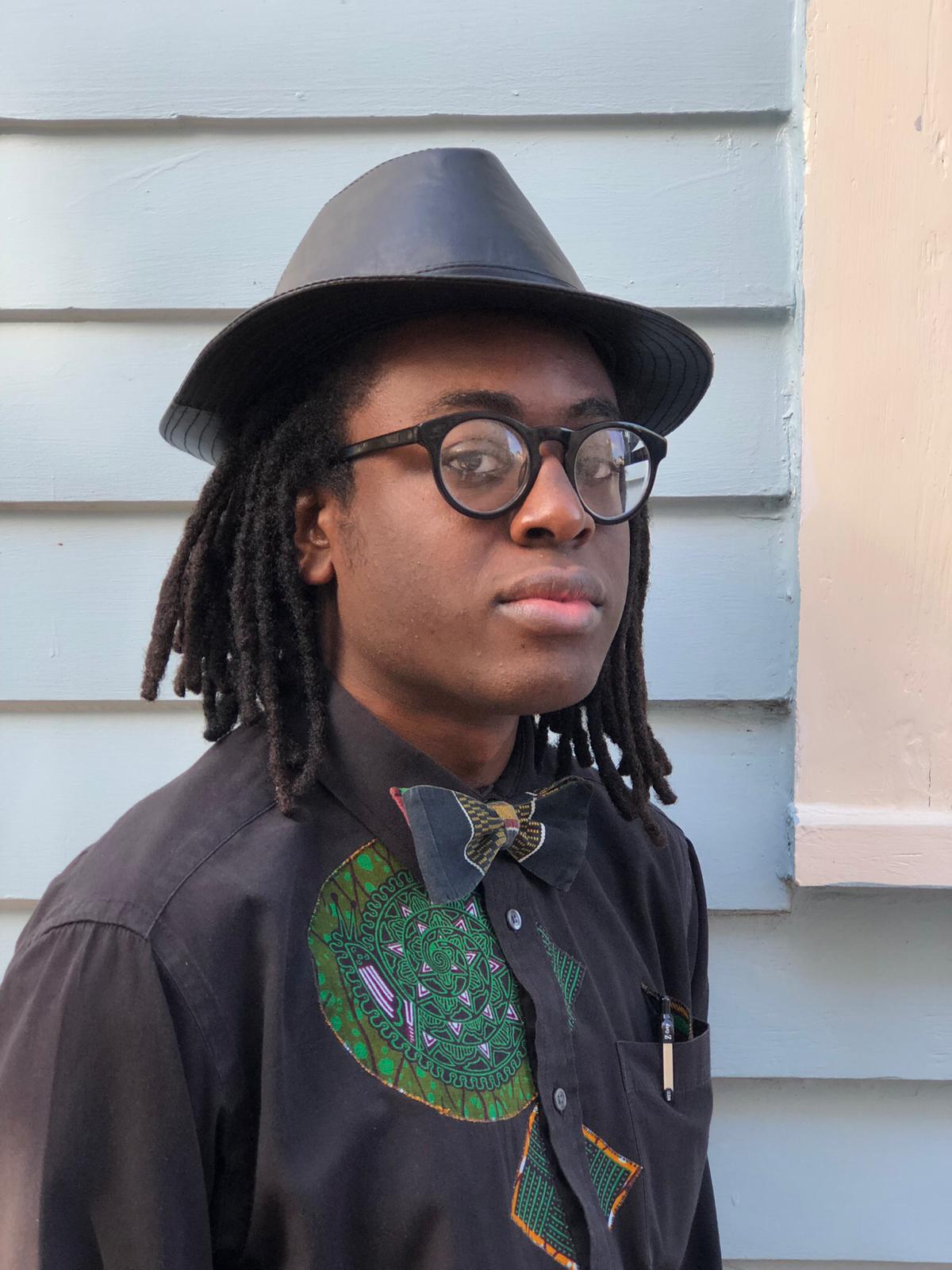
About Khalif Aziz B.
Khalif Aziz B. is a dedicated JAMNOLA storyteller and Doctoral student of Anthropology. His work focuses on the intersection of heritage, performance, and the preservation of New Orleans’ unique cultural landscape. Through research and storytelling, he helps illuminate the living traditions, community histories, and cultural expressions that continue to shape the city today.
← Back to Blog du JAMNOLA